

Dark spots are the UAE's most stubborn skin complaint for a simple reason: the same sun that created them keeps re-darkening them while you treat. That's why fading pigmentation here isn't about one hero serum — it's a system: the right actives, in the right slots, protected by SPF every single day. Here's the complete playbook, built from products we stock and ship across the UAE.
First, know your spot
- Post-acne marks — flat brown or red marks where breakouts healed. The most treatable kind.
- Sun spots — small defined spots on cheeks, forehead, hands from cumulative UV. Treatable, but they return without SPF.
- Melasma — larger symmetrical patches, often hormonal. Improvable at home with strict sun protection and patience; stubborn cases deserve a dermatologist.
The actives that actually move the needle
Vitamin C — the morning brightener
The daily glow-and-defend layer: it brightens overall tone and neutralises the UV-triggered free radicals that provoke new pigment. La Roche-Posay Pure Vitamin C10 is the potent classic; CeraVe's 10% Vitamin C adds ceramides for sensitive-leaning skin.
Tranexamic acid (TXA) — the K-beauty spot specialist
Anua's Niacinamide 10% + TXA 4% pairs tone-evening niacinamide with TXA, which interrupts the signal telling skin to overproduce pigment — one of the most effective over-the-counter combinations for stubborn marks.
Mela B3 — the dermatological heavyweight
La Roche-Posay Mela B3 is built around Melasyl, a patented melanin-targeting molecule, with 10% niacinamide — clinically tested on exactly the stubborn, recurring spots UAE sun produces.
Alpha arbutin & azelaic acid — the gentle correctors
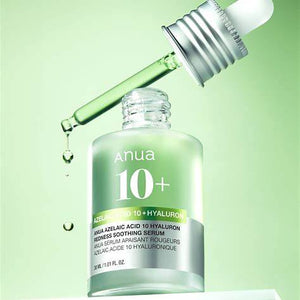
The Ordinary Alpha Arbutin 2% suits every skin type including sensitive; Azelaic Acid 10% brightens while calming redness — and it's one of the few actives considered safe in pregnancy (confirm with your doctor).
The routine that puts it together
Morning: gentle cleanse → vitamin C → moisturizer → SPF 50. Night: cleanse → your targeted corrector (TXA, Mela B3, arbutin or azelaic — pick one to start) → moisturizer from the hydration edit. Exfoliate with a gentle acid one or two nights a week to speed surface turnover — not daily.
The honest timeline
Pigment sits deep and clears with skin's natural turnover: expect first visible change around week 4–6 and meaningful fading at 8–12 weeks of daily consistency. Take a photo in the same light every two weeks — that's how you'll actually see it. Anything promising erased spots in days is marketing, not chemistry.
The step that decides everything
SPF 50, every morning, reapplied when you're out — because a single unprotected week in UAE sun can undo a month of serum work. Sunscreen isn't the boring add-on to a brightening routine; it is the brightening routine. Start with our oily-skin sunscreen guide if texture has put you off before.
Frequently asked questions
Can I combine vitamin C and TXA?
Yes — vitamin C mornings, TXA (or Mela B3) nights is a well-tolerated, effective split. Introduce one at a time, two weeks apart.
Why do my spots come back after fading?
Sun exposure reactivates the melanocytes you just calmed. Daily SPF plus a maintenance dose of your corrector two or three nights a week keeps them quiet.
Do dark-spot products work on deeper skin tones?
Yes — azelaic acid, TXA and arbutin have good evidence across skin tones and are gentler than aggressive acids, which matter more on deeper tones where irritation itself can trigger pigmentation.
Your 12-week plan, week by week
- Weeks 1–2: establish the base — vitamin C mornings, SPF daily, corrector three nights a week. No visible change yet; you're building tolerance.
- Weeks 3–4: corrector nightly if skin is comfortable. Add a gentle exfoliating acid one night a week (never the same night as your corrector). First hints of brighter overall tone.
- Weeks 5–8: the working phase. Marks soften at the edges first — compare your week-zero photo, not yesterday's mirror. Resist adding new products; consistency is the active ingredient now.
- Weeks 9–12: visible fading on post-acne marks and newer sun spots. Older, deeper pigment keeps improving beyond week 12 — this is a marathon the products win slowly.
- After: drop the corrector to two or three maintenance nights weekly. Keep vitamin C and SPF forever — they're what stop the next spots.
What about exfoliating acids?
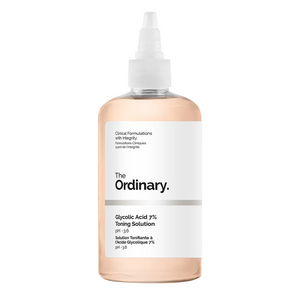
Glycolic and lactic acid speed the surface turnover that lets treated pigment shed — think of them as the escort service for your corrector. Once or twice a week is plenty: The Ordinary's Glycolic 7% toner on a corrector-free night works well. Daily acid use in a UAE summer is how people end up with more pigmentation, not less — irritation itself triggers melanin, especially on deeper skin tones. Gentle wins.
When to stop DIY and see a dermatologist
Book a professional when: a spot changes shape, colour or texture (rule out anything serious first — always); melasma covers large areas and resists 12 weeks of consistent care; or you want to combine home care with in-clinic options like prescription retinoids or laser. Home routines remain the maintenance layer around any clinical treatment.
The bottom line
Pick one corrector, wear vitamin C in the morning, protect with SPF 50 daily, and give it twelve honest weeks. The full arsenal — 110+ brightening products, 100% authentic from authorized distributors — lives in our brightening & dark spots collection, with free UAE delivery over AED 80. Real customer experiences are on our serum reviews page.